
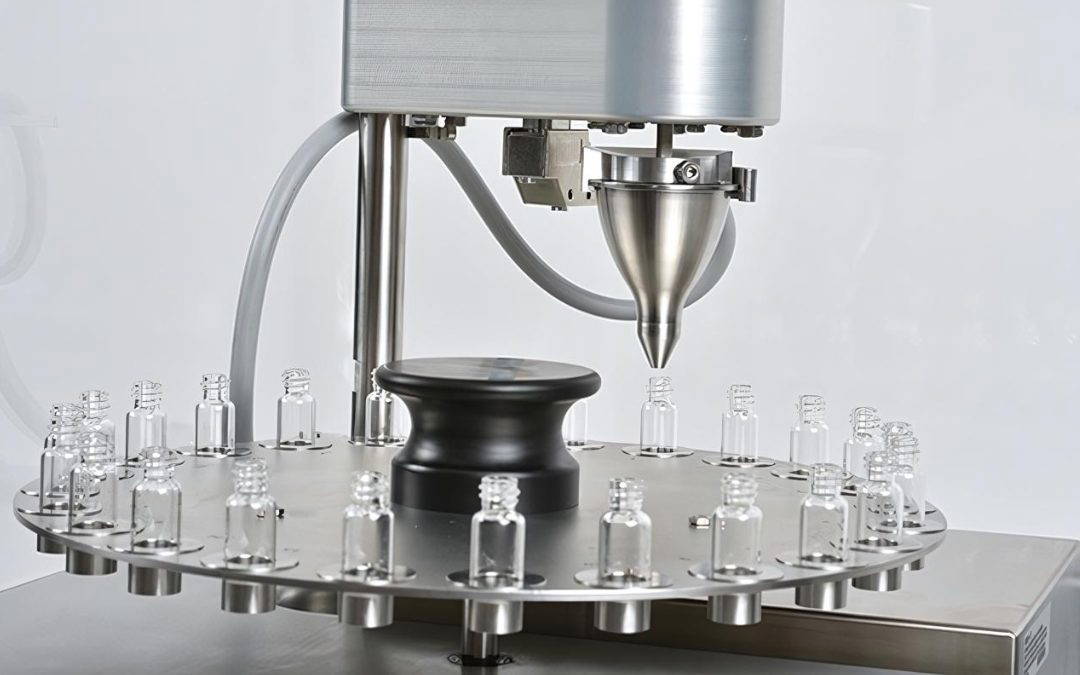
In pharmaceutical manufacturing, moving from small-volume powder dispensing to large-scale manufacturing does not come without its challenges.
The most significant?
Maintaining optimal powder flow.
We know the powder dispensing process can be tightly managed and controlled, performing reliably when only a limited number of batches are required.
However, this changes when dispensing is required to scale.
Small inefficiencies can quickly lead to bottlenecks and increasing variability, which in turn can lead to poor quality, an increase in costs, and safety concerns.
In this post, we look at some of the most common areas where powder dispensing can break when you begin to scale and factors to consider to ensure processes remain stable.
Challenges of powder dispensing at scale
Pressure on manual resources
During development, production volumes can be low, allowing for inefficiencies in dispensing or challenges in a process (relating to equipment or volumes) to be adapted manually.
However, as production increases, more time and resources are required, where greater pressure is placed on manual handling and the overall production cycle, hence, these small manual adaptations become harder to ensure and in some cases carry out.
This can lead to powder dispensing being unable to keep pace with operations, resulting in a bottleneck in production and, more significantly, a lack of accuracy, repeatability, and control.
Manufacturers must, therefore, have extensive knowledge of the process, the equipment, and materials, including any slight variations before scaling begins. It is also essential to investigate automation and invest in the right automated solution for your process so you can be confident in the dispensing outcome without the need for manual intervention.
Variability can increase with volume
It is vital to have a narrow range of variability when manufacturing pharmaceutical products. Even the smallest variation in powder quantity or dispensing conditions can impact process and quality.
At smaller production volumes, we understand that variations may be easier to identify and correct; however, we know that scaling increases dispensing cycles, materials, and environmental changes, leading to an increase in opportunity for variation.
This makes it essential for manufacturers to understand the physical properties of the powder, changes in equipment, environmental conditions, material flow, and manufacturer technique, monitoring and measuring all of these aspects, and putting in place process parameters to control the process with higher levels of consistency.
Bottlenecks in dispensing
Bottlenecks can occur at the powder dispensing stage, delaying scheduling, equipment utilisation, labour requirements, and the overall coordination of the manufacturing process.
For example, when scaling, the need is to consistently and accurately dispense the powder into the capsules without creating high fluctuations in capsule weight and concentration.
If the powder dispensing stage cannot handle this when volumes begin to increase, bottlenecks will quickly start to occur, creating inefficiencies and delays.
Identifying bottlenecks early is important when planning for increased production as improving a single issue at one stage can potentially have a wider impact on the process’s overall efficiency.
Not meeting industry requirements
As a highly regulated industry it is vital that manufacturers meet all guidelines at all times.
When production begins to scale, inconsistencies can occur, so additional checks and monitoring must be included to avoid material waste and inconsistent results.
It is not, therefore, advisable to simply focus on achieving higher dispensing needs. Instead, the process should focus on delivering reliable results and repeatedly, where you can maintain control and consistency.
Powder dispensing at scale
Before increasing production volumes, manufacturers should examine, in detail, their existing dispensing workflow and how this is likely to perform under greater demand.
Look at what your current dispensing process is; are there currently any manual interventions to note? What is the current waiting period for transfer?
When and how are quality checks carried out?
Look at what areas of the current process could pose a challenge when you scale.
Areas to consider:
- Will there be any equipment discrepancies moving from small dispensing to larger scale?
- What are the characteristics of the powder to be dispensed?
- What dispensing steps require manual intervention?
- Where is the likelihood for variability to occur?
- Where do/could bottlenecks in the process occur?
- Can dispensing performance be monitored consistently?
The key is to identify issues and limitations within your current workflow and the measures that must be put in place to mitigate these when scaling.
Scaling successfully
Reviewing current dispensing workflows and identifying where throughout pressures, bottlenecks, and batch variability could occur is the first step in scaling successfully.
This is where Gironex can help.
Providing automated gravimetric powder micro dispensers that enable manufacturers to ensure precision powder dispensing for routine laboratory applications to larger manufacturing environments you can achieve precision, control, and efficiency across all powder dispensing requirements.
Inefficiencies that may seem small and no doubt manageable at small volumes can create substantial challenges when processes are repeated at scale – can you afford to run the risk?
Review your current dispensing workflows and let us help you identify potential bottlenecks in your process with a process review call with one of our team.
Book a process review call today.